
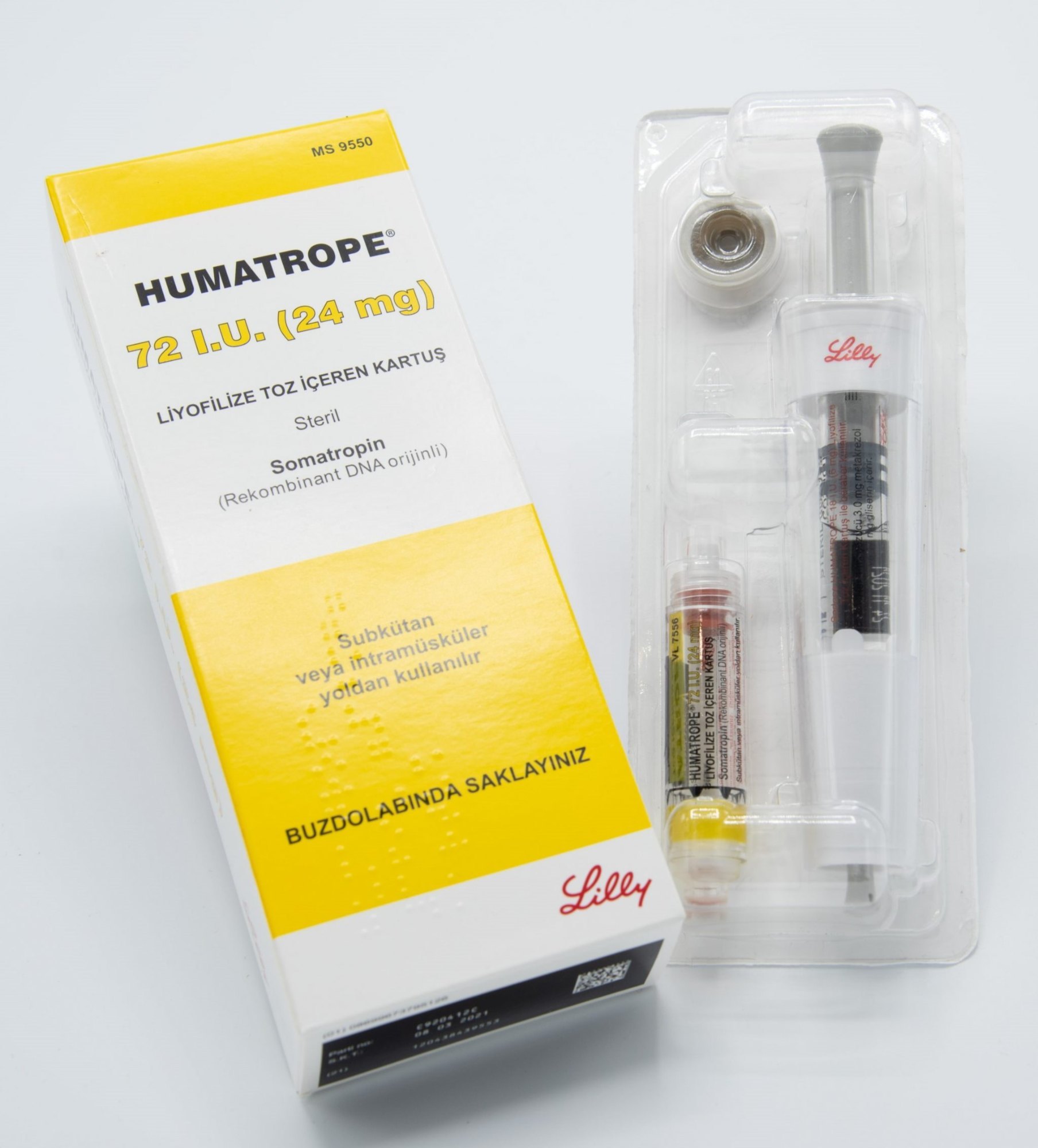
Description
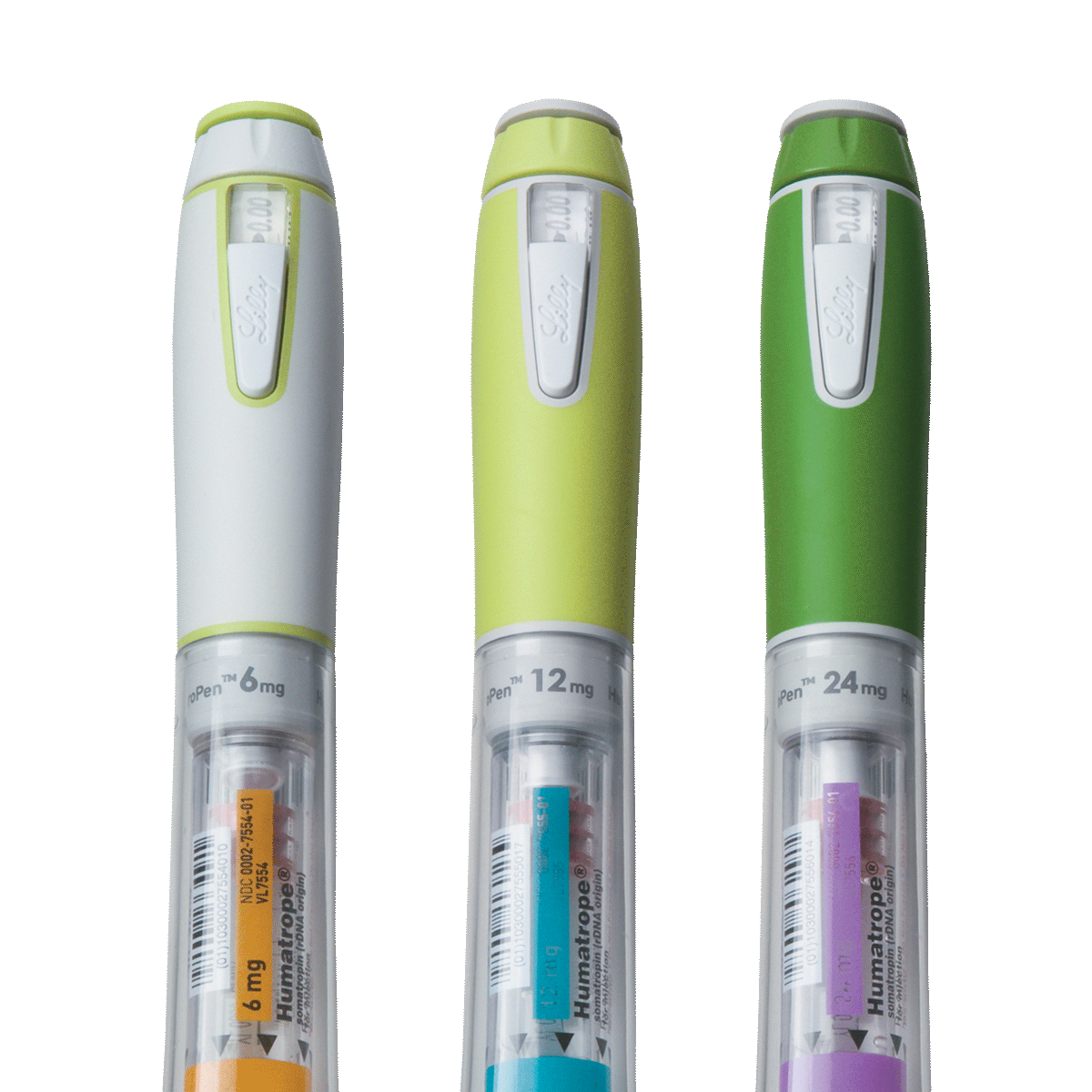
What is Humatrope (somatropin) for injection?
Humatrope is a man-made form of human growth hormone. It was first approved in 1987 to treat children who are growing slowly because they do not make enough growth hormone on their own.
Humatrope is available in 6 mg, 12 mg, and 24 mg cartridges for use in a HumatroPen® injection device.
Who is Humatrope for?
Humatrope® (somatropin) for injection is used to treat children who are short or growing slowly because they:
- Do not make enough growth hormone on their own
- Have Turner Syndrome
- Have idiopathic short stature, which means they are shorter than 98.8% of other children of the same age and sex, are growing at a rate not likely to allow them to reach normal adult height
- Have SHOX deficiency
- Were born smaller than normal for the number of weeks of pregnancy and do not catch up in height by 2 to 4 years of age
Humatrope is used to treat adults who have growth hormone deficiency.
Do not take Humatrope if you are having serious complications after having open heart surgery, abdominal surgery, or serious injuries involving many body systems, or are having life-threatening breathing problems. Deaths have been reported in such cases.
How it Works
How does Humatrope work?
Humatrope is a man-made form of growth hormone. Growth hormone is essential for growth—made by the pituitary gland (located at the base of the brain), then released into the bloodstream, where it travels to the body’s tissues. Here it stimulates production of another hormone important for growth, called insulin-like growth factor 1, or IGF-1. Growth hormone works to stimulate growth, in large part due to its effect in producing IGF-1.
What can I expect?
Although results may be different for everyone, Humatrope has data from clinical studies to help support treatment decisions. Throughout treatment, help your child remember that growth is a gradual process that takes time, even with treatment. Talk with your doctor about setting realistic expectations for your child’s treatment, and include your child in the conversation. Helping a child understand what to expect may help them stay motivated to continue therapy.
Where can I learn about safety?
Humatrope underwent studies that assessed safety and tolerability. When prescribing treatment for your child, your doctor is able to carefully consider the results of those studies by reviewing the Full Prescribing Information for Humatrope. You can also read through the Full Prescribing Information , as well as the Important Safety Information for Humatrope on this site. If you want help in understanding that information, or if you have specific questions about Humatrope safety and tolerability with your child in mind, please discuss them with your doctor.
About Growth
There is a wide range of normal heights during childhood. See below for examples* of normal height ranges at different ages.

2 Years of Age
Boys: About 32.0 to 37.0 inches
Girls: About 31.0 to 36.5 inches

5 Years of Age
For both boys and girls:
About 39.0 to 46.0 inches

10 Years of Age
Boys: About 49.5 to 60.0 inches
Girls: About 49.5 to 59.5 inches

15 Years of Age
Boys: Boys: About 61.0 to 72.5 inches
Girls: About 59.0 to 68.5 inches
*Examples use the 3rd and 97th percentiles for US children as the upper and lower limits of the normal range.
How is growth measured?
Regular, accurate measurements of weight and height are an important part of a child’s health care. In infancy, length and weight should be regularly checked at doctor visits. During early childhood, measurements are usually taken about twice each year, and more often if there is anything unusual about a child’s growth.

Growth Charts
To see if your child is growing normally, your doctor will compare your child’s growth to other children of the same age and sex. Growth charts showing the averages and normal ranges for height, weight, weight-to-height ratio, and head size of children at different ages are used to check your child’s growth over time.

Stadiometer
Throughout a child’s school years, it is helpful to collect accurate measurements at least once a year. Among the many ways to measure height and weight, doctors and nurses generally use an instrument called a stadiometer for accurate height measurements. A stadiometer is a carefully engineered device used to obtain accurate height measurements. A stadiometer typically has a vertical ruler with a sliding horizontal rod that is adjusted to rest on the top of the head.
Growth Disorders
What are growth disorders?
A growth disorder or condition is a diagnosis your doctor may make to understand or explain why your child isn’t growing as normally expected.
Many factors may affect how much and how rapidly a child grows, and how tall he or she will be as an adult. Before diagnosing a child with a growth disorder, a doctor may rule out other common causes of growth problems, such as poor nutrition, deficiencies of hormones other than growth hormone, and other illnesses.


Reviews
There are no reviews yet.